America’s most trusted roofing material. Proven protection, timeless curb appeal, and a style for every Tennessee home.
Schedule Your ConsultationAre you considering asphalt shingles for your Tennessee home or business? If so, you are looking at the most popular roofing material in America, and for good reason. At Jeff Woods Construction & Roofing, we install asphalt shingle roofing systems across Middle and East Tennessee, from Crossville and Cookeville to Knoxville and every community in between.
Asphalt shingles cover roughly four out of five homes in America, and they remain the go-to roofing material across Tennessee. The reasons are straightforward. Shingles deliver reliable, proven weather protection backed by over a century of performance. Furthermore, modern architectural shingles carry wind ratings up to 130 mph and come in dozens of colors and profiles that suit any home style. When a repair is ever needed, it is fast and simple.
This guide covers everything you need to know about asphalt shingle roofing in Tennessee. First, we explain the main types of shingles and how they perform in our climate. Then we walk through the installation process and how shingles stack up against metal roofing. Finally, we show you how to choose the right contractor for the job.
An asphalt shingle is built around a fiberglass mat, coated on both sides with weathering-grade asphalt and surfaced with ceramic-coated mineral granules. The granules protect the asphalt from UV damage and give the shingle its color. Installers fasten the shingles in overlapping courses over a protective underlayment, working from the eaves up. The result is a layered, water-shedding surface that has protected American homes for over a century.
Modern shingles are a far cry from the thin 3-tab products of decades past. Today’s architectural shingles are thicker, heavier, and engineered with stronger adhesive sealant strips that lock each course to the one below it. Many also carry impact-resistance ratings and algae-resistant granules that keep Tennessee roofs looking clean for years.
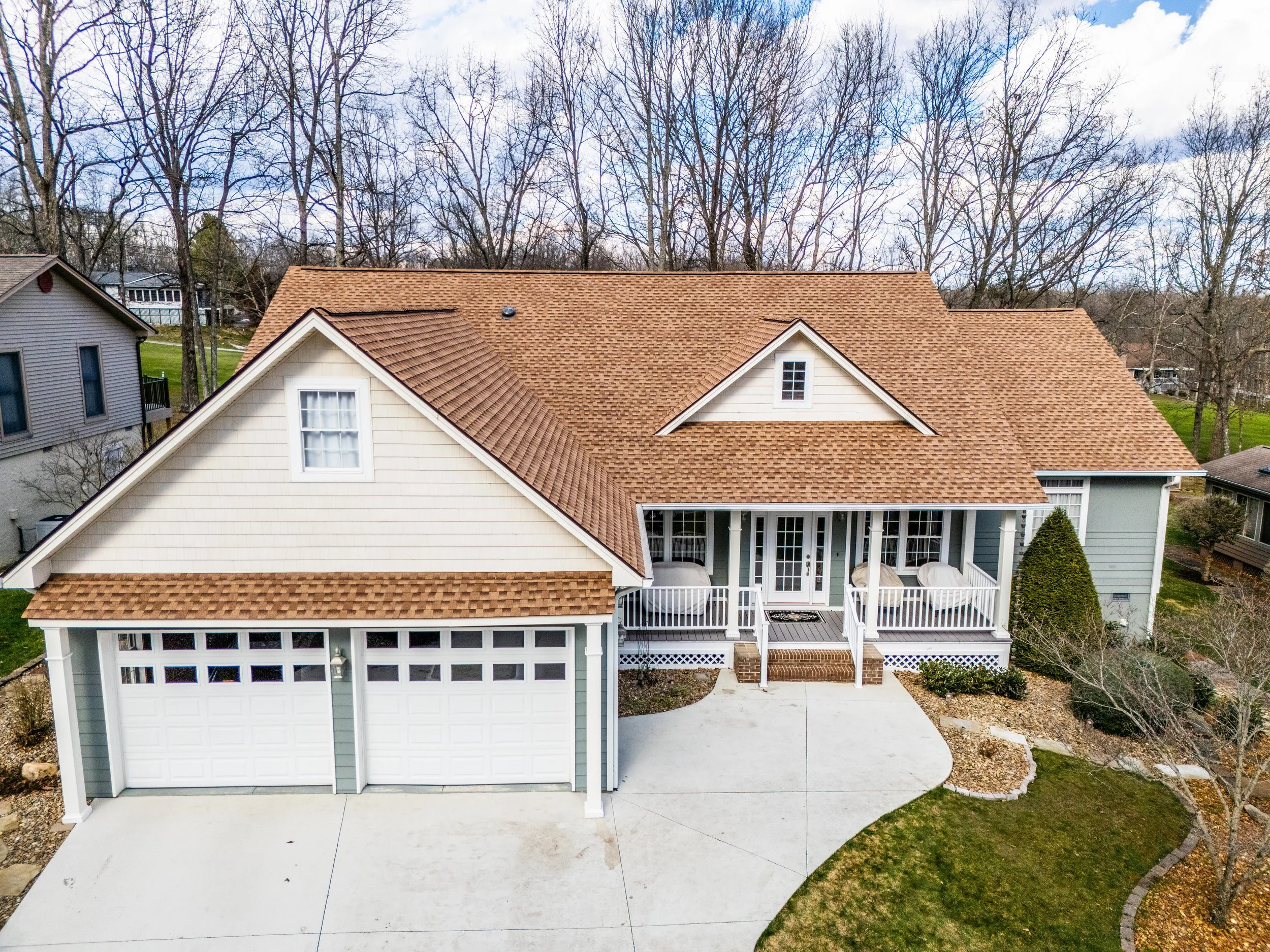
Tennessee property owners generally choose from three shingle styles. Each one delivers a different level of performance and a different look:
Flat, single-layer shingles with a uniform, repeating pattern. A simple, time-tested option best suited for rental properties and outbuildings. Lighter and less wind-resistant than architectural shingles.
Multi-layer, dimensional shingles that create depth and shadow lines across the roof. Stronger, heavier, and rated for higher winds than 3-tab. The standard choice for Tennessee homes, and what we install most often.
The thickest, most dimensional shingles available, engineered to mimic slate or wood shake. Premium curb appeal, with the best impact and wind performance in the shingle category.
Are you still comparing materials? Our Roofing Materials Guide: Best Roof Types for Tennessee Climate walks through every option available to Tennessee homeowners.
Tennessee is a demanding environment for any roof. Summers push temperatures well past 90°F. Spring storms bring hail and high winds. Meanwhile, winters deliver repeated freeze-thaw cycles that stress weaker materials. A quality shingle system, installed correctly, handles all of it with proven, dependable performance.
Asphalt shingles are the most widely installed roofing material in the country, and that ubiquity works in your favor. The material is universal, so repairs are fast, simple, and easy to match. Installation is quicker than any other major roofing system, which means less disruption to your household. And with over a century of real-world performance behind them, shingles are a known quantity. No surprises, no experiments.
Modern architectural shingles carry wind ratings up to 130 mph when installed to manufacturer specifications. Their adhesive sealant strips bond each course to the one below, creating a unified surface that resists uplift. In addition, impact-rated shingle lines stand up well to the hail that Tennessee’s spring storms deliver. For more on protecting your home from storms, see our Storm Damage Roofing Guide for Tennessee Homeowners.
No roofing material offers more variety than asphalt shingles. Dozens of colors, multiple profiles, and designer lines that mimic slate or wood shake mean there is a shingle for every home and every HOA. Color matters for performance too. Our Energy-Efficient Roofing Colors for Tennessee Homes article explains how lighter shades help manage summer heat.
When a shingle is damaged, a crew can replace it in minutes without disturbing the rest of the roof. That simplicity makes shingles the easiest roof to own and maintain. Moreover, a fresh shingle roof is one of the highest-return improvements you can make before selling a home. Our Boost Your Home’s Value with a New Roof or Deck in Tennessee article digs into that return on investment.
As a certified GAF roofing contractor, Jeff Woods Construction installs the full system rather than shingles alone. That means underlayment, starter strips, ridge caps, and ventilation components engineered to work together, all installed to manufacturer specification.
Most Tennessee homeowners weigh asphalt shingles against metal roofing. Both protect a home well when installed correctly. However, they serve different priorities. Here is how the two systems compare:
| Factor | Asphalt Shingles | Metal Roofing |
|---|---|---|
| Lifespan | 15 to 30 years | 40 to 70 years |
| Wind Resistance | Up to 130 mph | Up to 140+ mph |
| Style & Color Options | Widest selection available | Moderate |
| Installation Time | Fastest of any major system | Longer, more specialized |
| Repair Ease | Fast and simple | More specialized |
| HOA / Historic Compatibility | Universally accepted | Sometimes restricted |
Metal lasts longer, and for some homeowners that longevity is the priority. However, shingles win on style flexibility, installation speed, repairability, and universal acceptance. If you plan to sell within 10 to 15 years, or if your home sits in an HOA or historic neighborhood, a quality architectural shingle roof is often the smarter choice. Want to weigh both options carefully? Our Roof Repair or Replacement guide and our Complete Guide to Roof Replacement in Tennessee both help.
One important note: shingles are not the right fit for every home. Very low-slope roofs and certain commercial structures need different systems. We will give you a straight recommendation based on your home, not a sales pitch.
The contractor performing the work determines the quality of a shingle roof. In fact, the same shingles installed by two different crews can produce very different results. Nailing pattern, underlayment, flashing, and ventilation all decide whether your roof reaches year 15 or year 30. Here is exactly how Jeff Woods Construction & Roofing approaches every shingle roofing project in Tennessee.
First, we inspect the existing roof deck, structure, and ventilation before we order any material. We check for rot, structural issues, and ventilation problems that could undermine a new roof. Catching these issues early protects your investment. Not sure whether you need a full replacement? Our roof inspection gives you a clear, documented answer.
Next, we remove the old roofing down to the deck. We never shingle over an old layer. Then we repair or replace any damaged decking and install fresh underlayment, with ice and water shield at the eaves, valleys, and penetrations. This layer adds a critical second line of defense against water.
After that, we install drip edge along the eaves and rakes and run starter strip shingles along every edge. Starter strips anchor the first course and give the roof its wind resistance at the perimeter, the exact place where uplift failures begin. Skipping this step is one of the most common shortcuts cheap installations take.
Then we install the shingles course by course with the correct nail count, nail placement, and exposure. Every installation follows manufacturer specifications precisely, because the rated wind performance depends on it. A shingle nailed too high or with too few fasteners loses that rating entirely.
Roof penetrations cause most leaks when crews fail to detail them correctly. These include chimneys, vents, skylights, and valleys. Therefore, we flash every penetration carefully, verify balanced intake and exhaust ventilation, and finish with matching ridge cap shingles. Proper ventilation alone can add years to a shingle roof’s life in Tennessee heat.
Finally, we walk the entire roof to confirm course alignment, sealing, and flashing details. We also run magnetic sweeps to clear the site of stray nails and debris. Before our crew leaves, you receive full documentation of the installation.
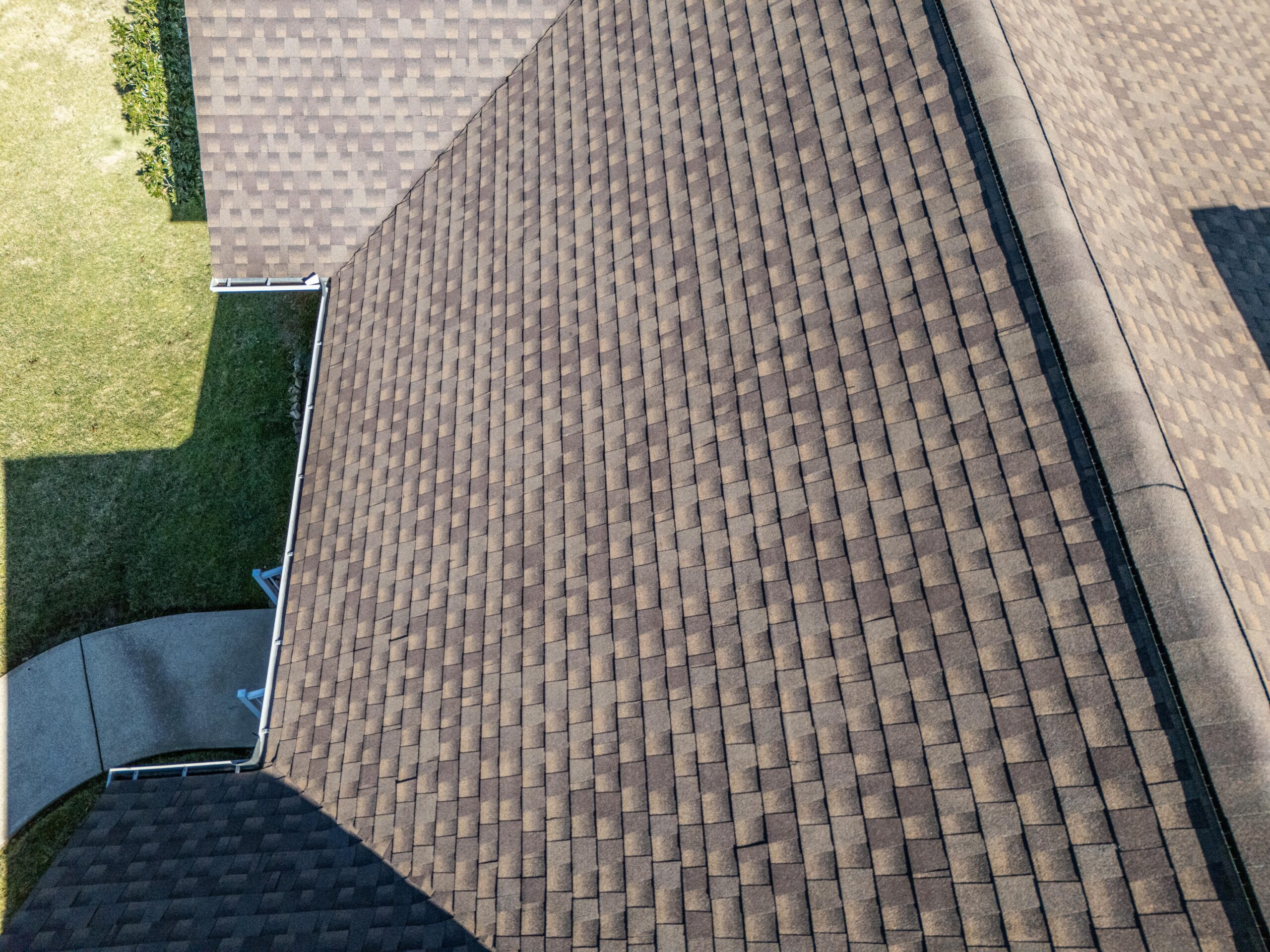
Keep one thing in mind when comparing contractors. Skipped starter strips, bad nailing patterns, reused flashing, and poor ventilation all lead to premature failure, and a roof that should have lasted 25 years failing at 12. Workmanship is everything with shingles.
Not all shingle roofs are created equal. As a certified GAF contractor, Jeff Woods Construction installs complete GAF roofing systems, meaning shingles, underlayment, starter strips, ridge caps, and ventilation components engineered to work together as one assembly rather than a pile of parts from different suppliers.
That certification matters in Tennessee’s climate. Our GAF Roofing Systems Explained article breaks down exactly what the system includes. For homes in storm-prone areas, Fortified Roofing takes shingle performance a step further with enhanced deck attachment, sealed roof decks, and stricter installation standards that add serious wind and hail protection.
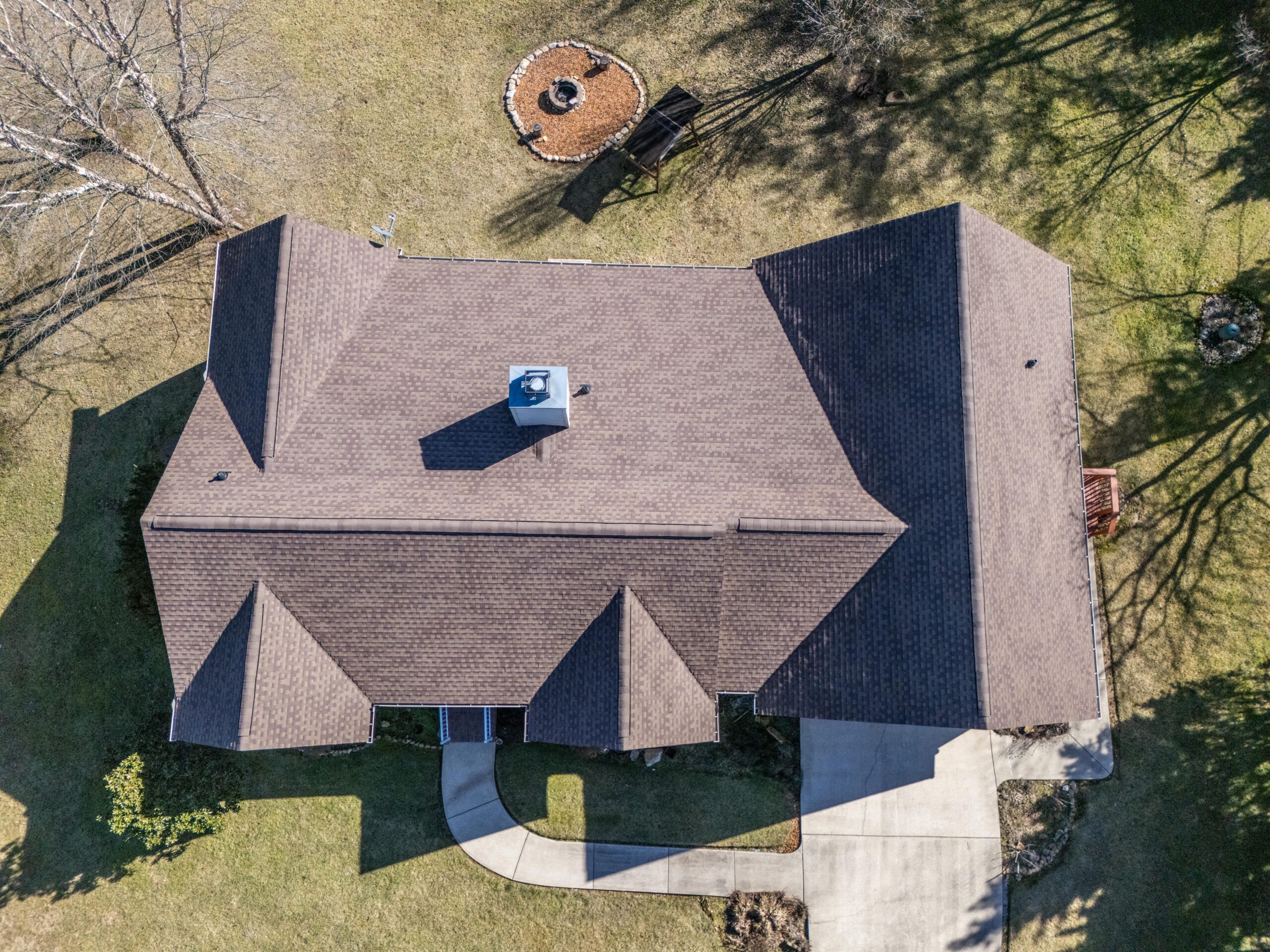
Some contractors offer to install new shingles directly over your old layer to save money. This shortcut often causes more problems than it solves. A second layer hides deck rot, traps heat that ages the new shingles faster, and telegraphs every bump and defect from the old roof through the new one. At Jeff Woods Construction, we tear off to the deck and do the job right the first time.
A shingle roof does not exist in isolation. A complete system includes proper underlayment, ventilation, flashing, and a maintenance plan. Together, these protect your investment over its full service life. Jeff Woods Construction provides all of it.
A documented picture of your roof’s condition before any major decision. See what our process covers.
Dealing with a leak right now? Our Emergency Roof Leak Guide covers what to do, and how to find a hidden roof leak before it spreads.
Hail and wind damage to shingles is often covered by insurance. Our Storm Damage Roofing Guide walks you through documentation and the claims process.
We handle assessment, installation, and replacement for every building type, including shingle, metal, and low-slope systems. See our Commercial Roof Replacement guide.
A few simple habits help your shingle roof reach the upper end of its lifespan, and in Tennessee’s climate that difference can be a decade. Jeff Woods Construction recommends the following for shingle roofs in Tennessee:
With proper care, a quality architectural shingle roof can deliver decades of dependable protection. Our Roof Maintenance Guide for Tennessee Homes provides a complete seasonal checklist. For wind-exposed homes, our Roofing Maintenance for High-Wind Areas article covers the extra steps those roofs need.
Jeff Woods Construction installs asphalt shingle roofing systems for homeowners and businesses throughout Middle and East Tennessee.
We also serve Fairfield Glade, Clarkrange, Jamestown, Livingston, and the surrounding communities across the region. See our East Tennessee roofing page for the full picture.
Our service area spans Cumberland, Putnam, Knox, Roane, Fentress, Overton, Loudon, and White counties. Do you not see your community listed? Simply contact us to confirm we serve your area.
There is no shortage of roofing contractors in Tennessee. What sets Jeff Woods Construction & Roofing apart is a consistent commitment to doing the work right. We bring the right materials, the right process, and the transparency property owners deserve.
Jeff Woods Construction has worked across Middle and East Tennessee for decades. As a result, we understand how the region’s weather affects every roofing system we install. Our practices account for Tennessee’s humidity, freeze-thaw cycling, UV intensity, and seasonal storms.
We are a certified GAF roofing contractor and follow manufacturer installation standards on every project. Nail placement, exposure, starter strips, and ventilation all get done to spec, because that is what the rated performance of the material actually depends on.
Every estimate is itemized and clear. Therefore, you will know exactly what materials we install and how we perform the work before anything begins. You get no surprises during the project and no hidden line items when it is done.
We handle every stage of the project in-house, from the initial inspection through final cleanup. In other words, you work with the same team from the first call to the final walkthrough. To learn more, visit the Jeff Woods Construction & Roofing homepage.
A professionally installed asphalt shingle roof in Tennessee typically lasts 15 to 30 years. Architectural and designer shingles reach the upper end of that range, while 3-tab shingles sit at the lower end. Installation quality and attic ventilation make a bigger difference than most homeowners realize. Our How Long Do Different Roof Types Last in Tennessee? guide compares lifespans across every major roofing system.
3-tab shingles are flat, single-layer shingles with a uniform pattern. Architectural shingles are built from multiple bonded layers, which makes them thicker, heavier, more dimensional, and rated for higher winds. The performance difference is significant, which is why architectural shingles are our standard recommendation for Tennessee homes.
Yes, when the right shingles are installed correctly. Modern architectural shingles carry wind ratings up to 130 mph, and impact-rated lines stand up well to hail. After any major storm, schedule an inspection. Hail damage is not always visible from the ground, and it is often covered by insurance. Our Storm Damage Roofing Guide for Tennessee Homeowners covers what to do.
It depends on age and extent of damage. Isolated missing or damaged shingles on a roof under 15 years old usually justify a repair. Widespread granule loss, curling, or repeated leaks on an older roof usually point to replacement. Our Roof Repair or Replacement guide walks through the decision, and a roof inspection gives you a documented answer.
We strongly advise against it. A second layer hides deck rot, traps heat that ages the new shingles prematurely, and telegraphs defects from the old roof through the new one. We tear off to the deck on every replacement so the new roof starts on a sound foundation.
Those streaks are algae growth, common in Tennessee’s humidity. They are cosmetic more than structural, but they age the roof’s appearance quickly. Modern shingles with algae-resistant granules prevent the problem, and it is one of the reasons we recommend current-generation architectural shingles over older product lines.
Yes, to a degree. Lighter shingle colors absorb less heat than dark ones, which helps in Tennessee’s long summers, though attic ventilation and insulation matter even more. Our Energy-Efficient Roofing Colors for Tennessee Homes article explains how color and finish affect performance.
Ready for a roof built to protect your home for decades? Our team is ready to help. You get no pressure, no hidden surprises, and straight answers from Tennessee’s trusted roofing team.
Schedule Your Consultation