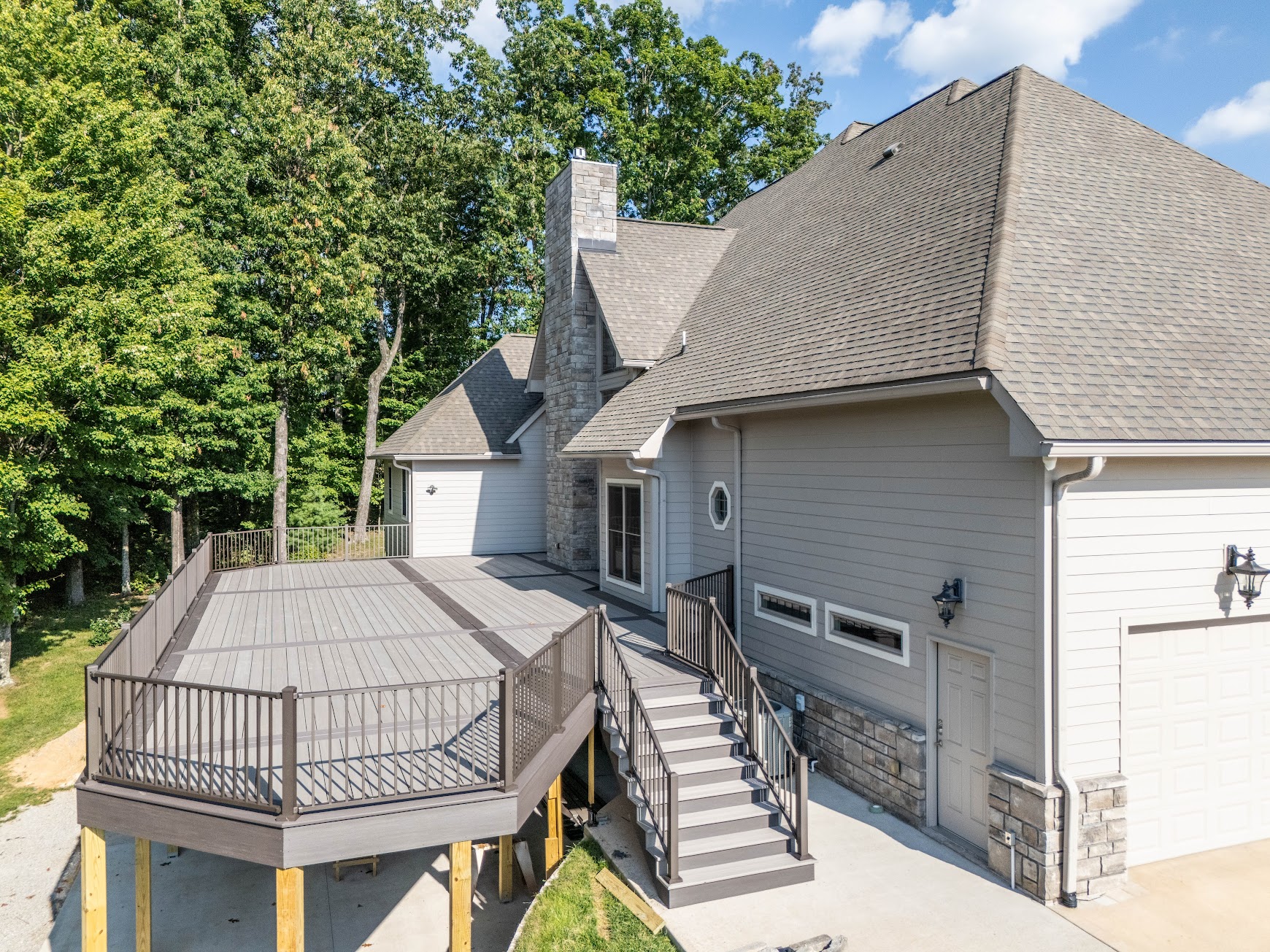
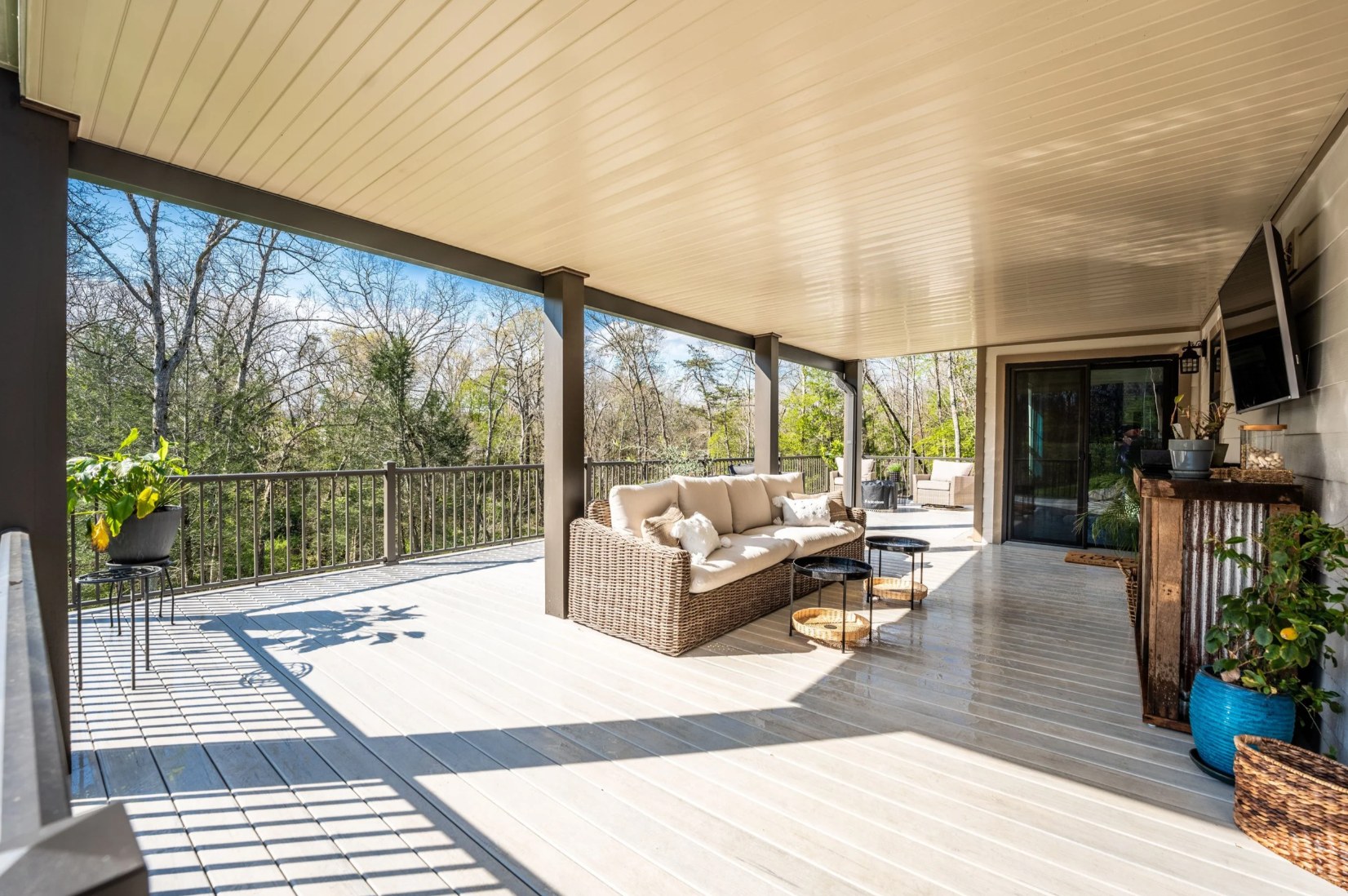
A deck railing can appear sturdy at first glance — straight balusters, secure posts, no visible damage. But when you lean against it and feel movement, that subtle wobble is a warning sign. At Jeff Woods Construction & Roofing, we frequently inspect decks where homeowners are surprised by how unstable their railings feel despite looking perfectly intact.
Understanding why your deck railings feel loose (even if they look fine) requires looking beneath the surface.
Fastener Fatigue Over Time
Deck railings are constantly exposed to vibration, weight pressure, temperature changes, and seasonal expansion and contraction. Over time:
- Screws loosen slightly
- Nails begin to withdraw
- Bolts lose clamping force
- Wood fibers compress around hardware
This gradual movement often isn’t visible, but it compromises structural rigidity.
Post Connection Weakness
The most common cause of railing movement is improper post attachment. Many older decks were built with railing posts fastened only with lag screws or nails to the rim joist.
Without proper blocking or through-bolting:
- The post flexes under lateral pressure
- The rim joist may rotate slightly
- Stress transfers into surrounding framing
The railing may look straight and aligned, yet still move noticeably when pushed.
Hidden Wood Deterioration
Even when the surface wood appears solid, internal rot or moisture damage can weaken connection points. Water intrusion around fasteners or post bases can cause:
- Softened wood fibers
- Reduced load resistance
- Compromised grip strength for screws and bolts
This hidden degradation is a major reason deck railings feel loose even if they look fine.
Code and Structural Load Requirements
Modern building codes require deck railings to resist significant lateral force (often 200 pounds of concentrated load). Older decks may not meet these standards.
If your deck was built years ago, it may lack:
- Proper tension ties
- Reinforced post blocking
- Approved bracket systems
- Through-bolt hardware
For a deeper technical breakdown of structural causes and repair methods, review Why Your Deck Railing Feels Loose — Common Causes & Fixes.
Natural Material Movement
Wood naturally expands and contracts with humidity changes. Over time, this movement slightly enlarges fastener holes and reduces friction grip.
Seasonal shifts can:
- Increase railing sway during humid months
- Create minor gaps at post bases
- Accelerate hardware loosening
Composite materials can also shift if framing underneath wasn’t reinforced properly.
Why Tightening Screws Isn’t Always the Solution
Many homeowners attempt quick fixes by tightening visible screws. While this may temporarily reduce movement, it rarely addresses the root structural issue.
If the underlying post-to-frame connection lacks reinforcement, surface adjustments won’t restore true stability.
At Check our Decking Services, we assess railing systems at the structural level — not just at the surface hardware.
When Loose Railings Become a Safety Hazard
A slightly loose railing may not seem urgent, but progressive movement can lead to:
- Sudden fastener failure
- Splitting at the rim joist
- Post detachment under pressure
- Increased liability risk
Railing instability should always be corrected before it escalates into a safety concern.
Schedule a Professional Deck Inspection
If your railing moves when pressure is applied — even slightly — it’s worth having it evaluated. Visit Contact Us to schedule an inspection and ensure your deck meets modern safety standards.
At Jeff Woods Construction & Roofing, we provide structurally sound decking solutions designed for long-term durability and homeowner safety.