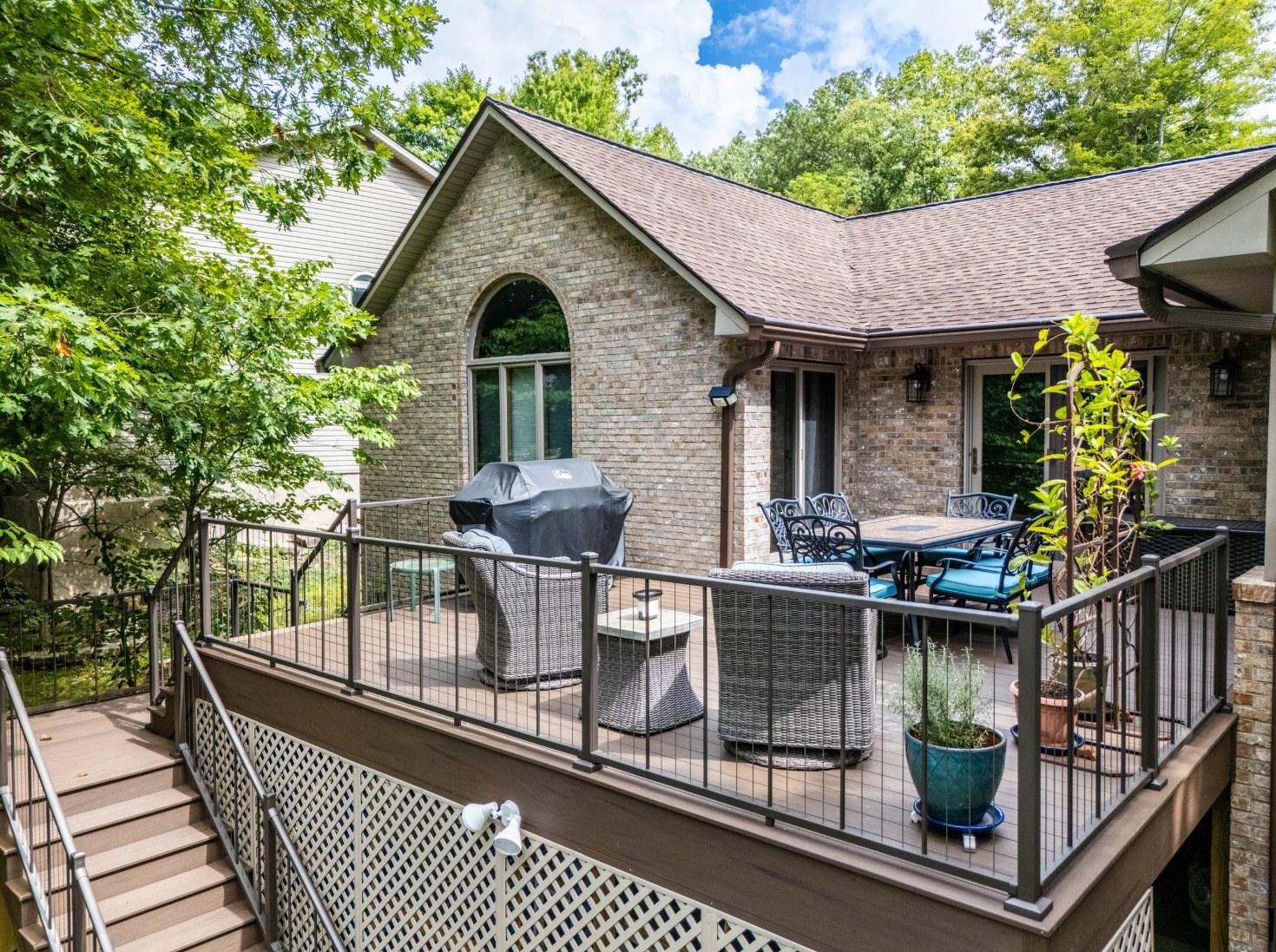
Once you’ve decided against traditional wood decking, the next decision is usually composite or PVC. Both are low-maintenance alternatives to pressure-treated lumber, and both hold up well in Tennessee’s climate, but they’re not the same material, and the cost difference between them catches a lot of homeowners off guard.
Here’s how composite and PVC decking actually compare, and what drives the cost difference between them.
The Core Difference
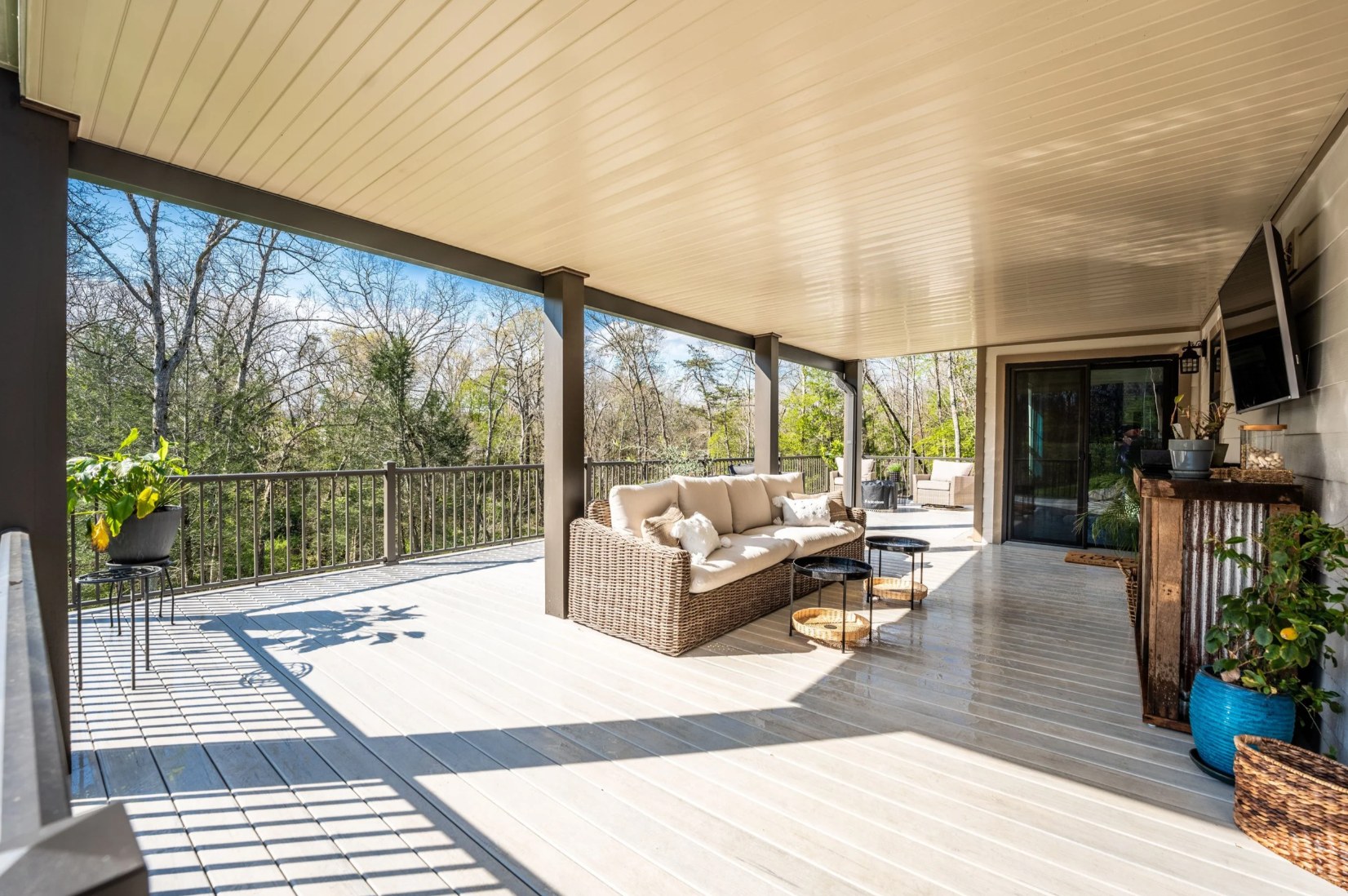
Composite decking is made from a blend of wood fibers and recycled plastic, which gives it a look and slight texture closer to natural wood. PVC decking is 100% synthetic, made entirely from cellular PVC with no wood content at all. That difference in composition is what drives most of the performance and cost differences between the two.
Composite Decking Cost
Composite decking typically sits in the middle of the decking cost spectrum, more expensive than pressure-treated wood upfront, but less expensive than PVC in most cases. The exact composite decking cost depends heavily on the brand and tier you choose, since composite ranges from entry-level capped composite to premium multi-layer boards with more realistic wood grain texture.
What it’s good for: Homeowners who want the closest visual match to natural wood without the maintenance burden of staining and sealing. Composite also pairs well with
aluminum or cable deck railings for a clean, modern overall look.
What to watch for: Composite can retain more heat underfoot than PVC in direct summer sun, and older or lower-tier composite boards are more prone to moisture absorption at cut edges if they aren’t properly capped.
PVC Decking Cost
PVC decking generally costs more upfront than composite, sometimes significantly more depending on the product line, but it comes with tradeoffs that some homeowners find worth the difference. Because PVC contains no wood fiber, it doesn’t absorb moisture the way composite can, which makes it a strong choice in humid or high-moisture areas of a property.
What it’s good for: Homeowners prioritizing maximum moisture resistance and long-term stability over the closest possible wood-look appearance. PVC also tends to stay cooler underfoot in direct sun compared to composite.
What to watch for: The higher upfront cost is the main tradeoff, and some PVC products have a more visibly synthetic appearance than higher-tier composite boards, though this varies significantly by brand and product line.
Composite vs. PVC: Quick Comparison
Composite — Upfront cost: moderate to high. Moisture resistance: good, varies by tier. Look: closest to natural wood. Heat retention: higher in direct sun.
PVC — Upfront cost: high. Moisture resistance: excellent. Look: more uniform, less wood-like. Heat retention: lower in direct sun.
Neither material is objectively better, it depends on your budget, how much the deck is exposed to direct sun or moisture, and how important a natural wood look is to you.
Don’t Forget the Railing and Framing
Decking material is only part of the overall cost and design decision. If you’re still working through what railing pairs best with composite or PVC decking, our comparison of
deck railing ideas walks through aluminum, cable, and wood options side by side. And if the deck is part of a larger multi-level layout, our guide to
multi-level deck design covers how material choice affects planning across different elevation changes.
Getting an Accurate Cost for Your Project
Composite and PVC decking cost estimates vary widely based on square footage, brand, framing requirements, and railing choice, so the only way to get a real number is a project-specific quote. Our
decking page has a cost calculator that lets you compare material options directly before you commit to either one.
Ready to Compare Decking Options?
Whether you’re leaning composite, PVC, or still deciding, we can walk you through real cost numbers for your specific project and help you weigh the tradeoffs that actually matter for your home. Call
(931) 787-7715 or
reach out through our contact page and we’ll help you land on the right material.