If you’re browsing deck railing ideas, the choice usually comes down to three materials: aluminum, cable, or wood. It’s a decision that tends to get made last in the planning process, after the decking material, the layout, and the budget are already locked in. That’s a mistake. Your railing is one of the most visible parts of the whole deck, and it takes more weather abuse than almost anything else on the structure. In Tennessee, where summers are humid and winters swing through repeated freeze-thaw cycles, the wrong railing material can mean sagging cable, peeling paint, or corroded hardware within a few seasons.
Here’s how aluminum, cable, and wood railings actually compare for a Tennessee deck, and how to figure out which one is right for yours.
Why Railing Material Matters More in Tennessee
Tennessee’s climate isn’t gentle on outdoor structures. Between the Upper Cumberland’s humidity, the freeze-thaw swings that hit deck hardware hard every winter, and long stretches of direct UV exposure in the summer, a railing has to hold up to more than it would in a milder climate. That’s part of why we walked through
how freeze-thaw cycles silently damage roofs in an earlier post. The same forces work on your railing hardware, just at deck height instead of the roofline.
Material choice affects three things over the life of the railing: how much maintenance it needs, how it holds up structurally, and how much it costs to replace when it eventually wears out.
Aluminum Deck Railing
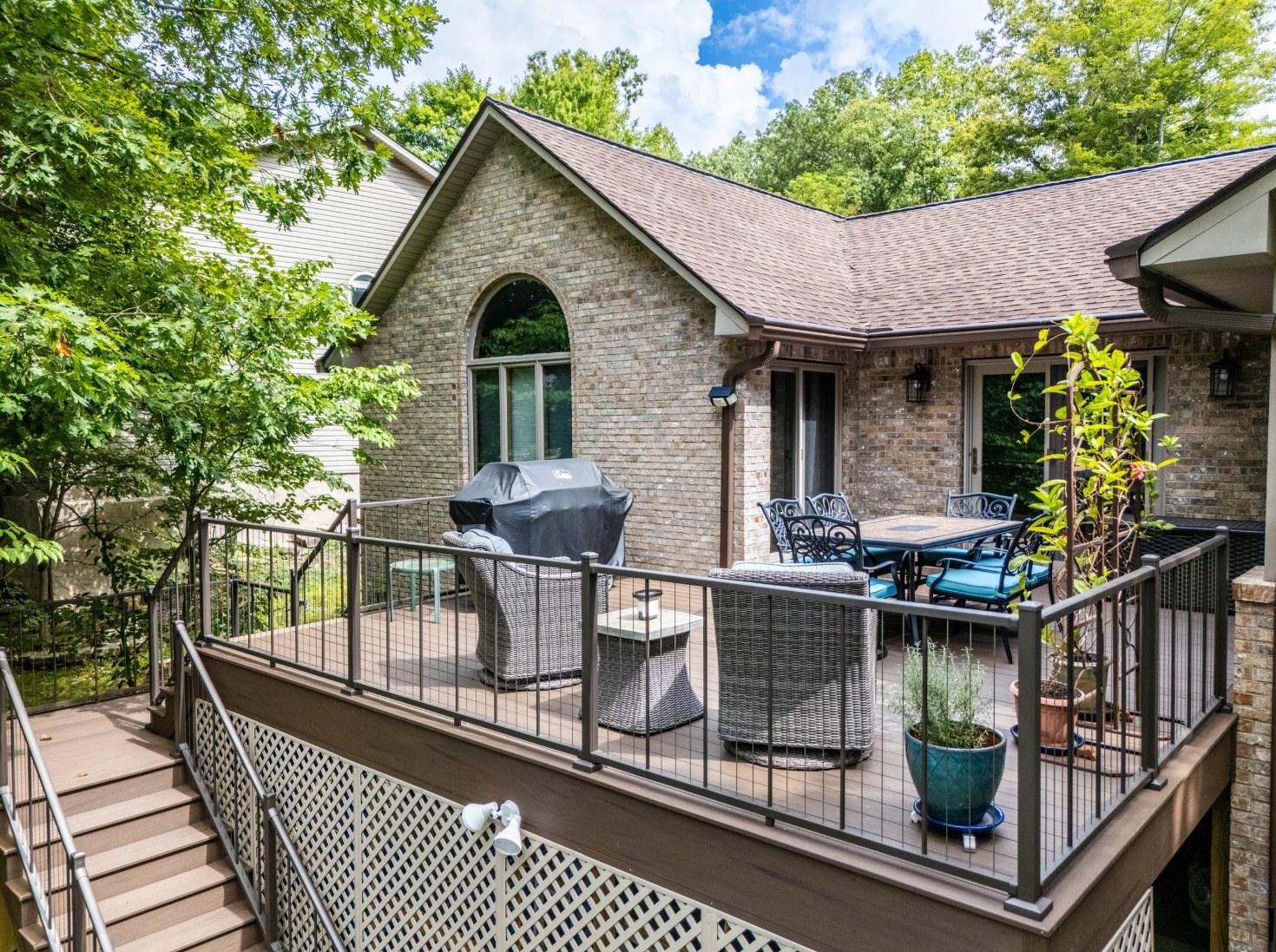
An aluminum deck railing is the most popular upgrade we install on Tennessee decks, and for good reason. It doesn’t rust, doesn’t rot, and doesn’t need to be refinished. A powder-coated aluminum railing goes up once and holds its color and finish for years without upkeep beyond an occasional hose-down.
What it’s good for: Homeowners who want a clean, modern look with the least amount of long-term maintenance. Aluminum pairs well with composite and PVC decking since neither one needs staining either, so the whole deck stays low-maintenance.
What to watch for: Aluminum costs more upfront than wood. It’s also a more rigid material, so it’s less forgiving on decks with uneven framing, though that’s rarely an issue on a properly built deck.
Cable Deck Railing
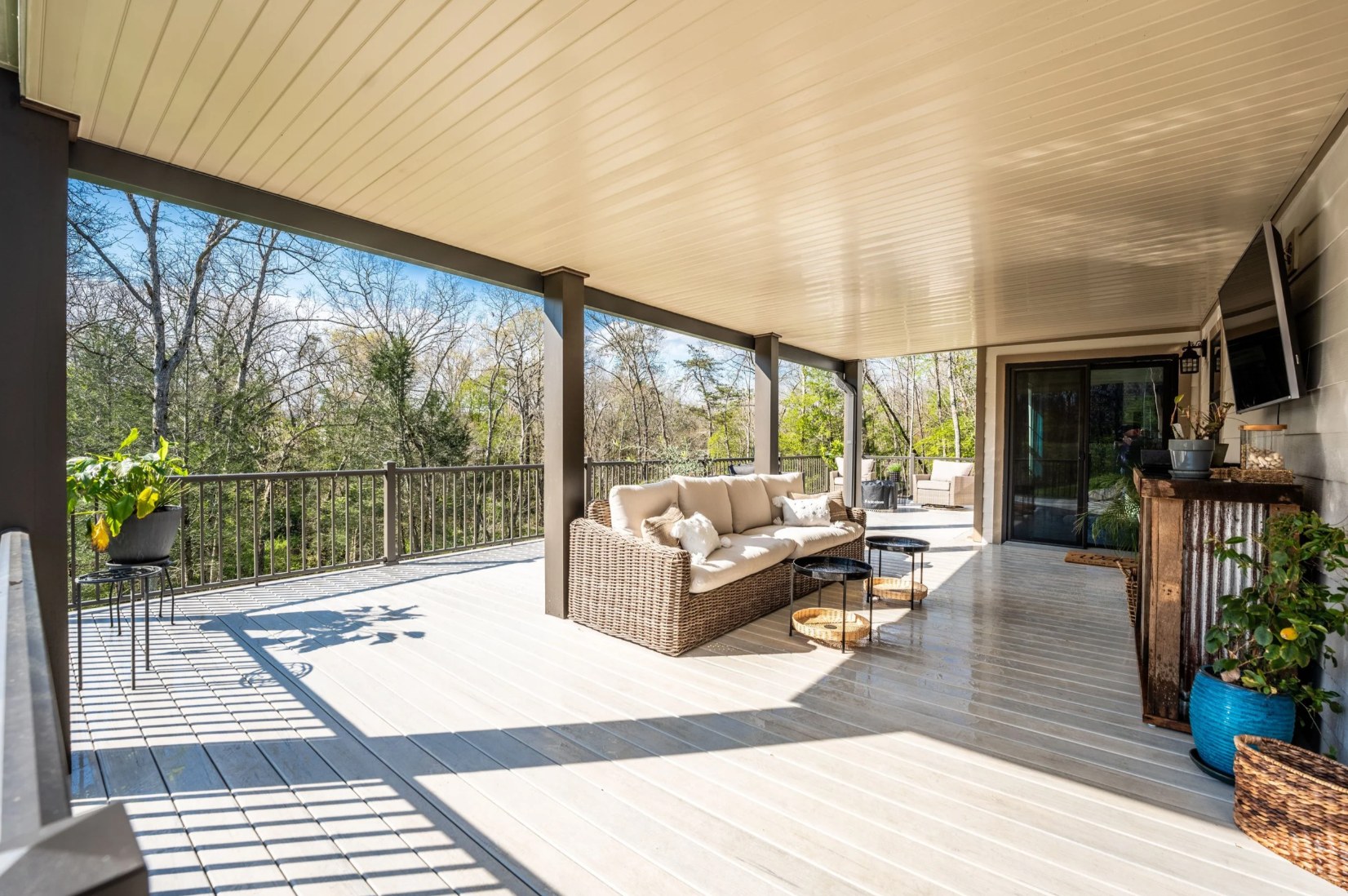
Cable deck railing has become one of the most requested looks for newer decks, especially ones built to take advantage of a view. Horizontal stainless steel cables run between posts, which keeps sightlines open in a way that pickets or panels can’t. It’s also a natural fit for the kind of layered outdoor space we cover in our guide to
multi-level deck design, where keeping the view open between levels matters just as much as it does on a single-tier deck.
What it’s good for: Decks where the view matters, whether that’s a wooded backyard, a lake, or the Cumberland Plateau in the distance. Cable also reads as more contemporary than traditional railing styles.
What to watch for: Cable needs to be properly tensioned during installation, and it can loosen over time as posts settle or wood framing shifts with seasonal moisture changes. That’s actually the exact issue we covered in
why deck railings feel loose even when they look fine. Cable systems need occasional retensioning as part of normal deck maintenance, which isn’t a flaw, just something to plan for.
Wood Railings
Wood is still the most affordable option and the easiest to match to a traditional home style. It’s also the railing material with the highest maintenance burden.
What it’s good for: Budget-conscious builds, and homes where a traditional or rustic look matters more than low upkeep. Wood railings pair naturally with pressure-treated decking, and if you’re still shaping the overall look of the space, our roundup of
custom deck ideas for East and Middle Tennessee is a good place to see how wood railings pair with different deck styles.
What to watch for: Wood needs to be stained or sealed regularly to prevent graying, cracking, and rot, especially in Tennessee’s humidity. Skipping maintenance shortens its lifespan considerably compared to aluminum or cable.
More Deck Railing Ideas: Quick Comparison
Aluminum — Maintenance: minimal. Best for: low upkeep, modern look. Upfront cost: higher. Climate resistance in TN: excellent.
Cable — Maintenance: low, occasional retensioning. Best for: open views, contemporary decks. Upfront cost: higher. Climate resistance in TN: very good.
Wood — Maintenance: high, regular staining and sealing. Best for: budget builds, traditional style. Upfront cost: lower. Climate resistance in TN: fair, depends on upkeep.
What Jeff Woods Construction Installs
We work with the full Westbury railing lineup, which covers all three approaches without mixing brands or quality tiers on the same job. That includes Westbury Aluminum Railing for a clean powder-coated look, VertiCable for a vertical cable configuration, and Bella Cavo for a horizontal cable system. You can see all three side by side on our
railings page, and each one links out to its full spec sheet on Digger Specialties if you want the manufacturer details.
If you’re still deciding between decking material and railing material together, our
decking page has a cost calculator that lets you compare composite and PVC options against different railing styles before you commit to either one.
Ready to Talk Railings?
Whether you’re building a new deck from scratch or replacing an aging railing on an existing one, we can walk you through which material fits your home, your budget, and how much upkeep you actually want to deal with. Call
(931) 787-7715 or
reach out through our contact page for a free, no-pressure consultation, and we’ll help you figure out the right combination for your deck.