There’s a frustrating truth about roof leaks that most homeowners only learn the hard way: by the time you see a water stain on your ceiling, the leak has already been doing damage for a long time. Water is patient. It travels, hides, and works its way through insulation, wood framing, and drywall long before it ever makes itself visible to you.
In this guide, Jeff Woods Construction & Roofing walks you through exactly how to find a hidden roof leak early — before it turns into a ceiling collapse, a mold problem, or a five-figure repair bill.
Why Hidden Roof Leaks Are So Dangerous
A visible leak is actually the best-case scenario. You see it, you call a roofer, and you get it fixed. The real danger is the leak you don’t see — the one quietly saturating your attic insulation, rotting your roof decking, and feeding mold growth inside your walls.
Here’s what a hidden roof leak can cause over time:
- Structural rot — Water-saturated wood framing loses its strength and integrity
- Mold and mildew growth — Mold can begin developing within 24-48 hours of moisture exposure
- Damaged insulation — Wet insulation loses its effectiveness and can retain moisture for months
- Electrical hazards — Water reaching electrical wiring or junction boxes creates serious fire and safety risks
- Interior damage — Ceilings, drywall, flooring, and personal belongings can all be affected
The longer a hidden leak goes undetected, the more expensive it becomes to fix. This is exactly why routine roof maintenance and regular inspections are so important for Tennessee homeowners. Read more about staying ahead of these issues: Roof Maintenance Guide for Tennessee Homes
The Most Common Places Hidden Roof Leaks Start
Before you can find a hidden leak, it helps to know where they most commonly originate. Roof leaks almost never start in the middle of a flat, open section of shingles. They almost always begin at a transition point — a place where two surfaces meet or where something penetrates the roof plane.
Around Chimneys
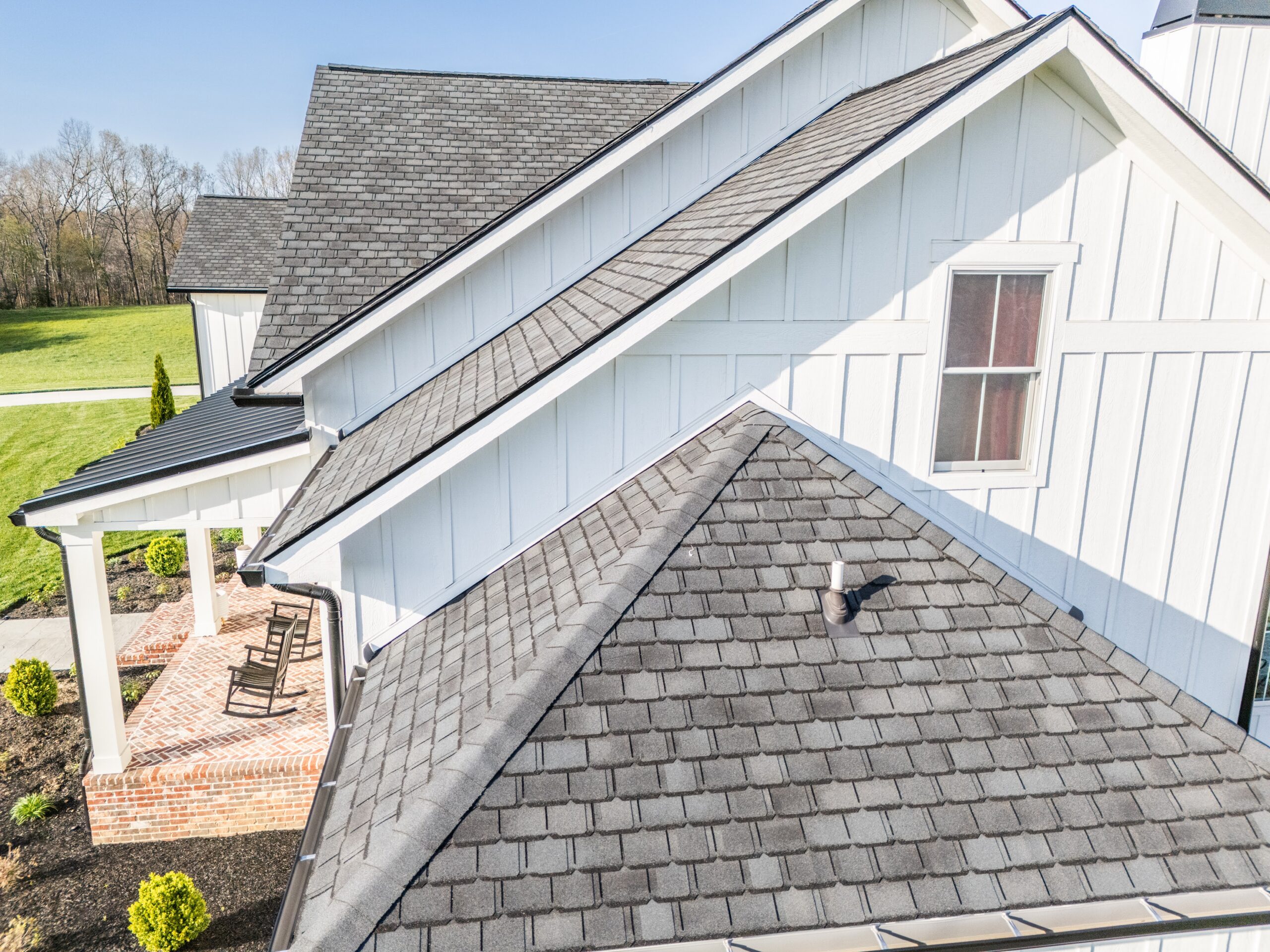
The flashing around your chimney — the metal strips that seal the joint between the chimney and the roof — is one of the most common sources of leaks. Flashing can crack, pull away, or corrode over time, creating a gap that allows water to pour in every time it rains.
In Roof Valleys
A roof valley is where two slopes meet. Water naturally channels through valleys at high volume during heavy rain, making them vulnerable to leaks if the valley flashing or underlayment is compromised.
Around Skylights and Vents
Any penetration through the roof surface — skylights, plumbing vents, exhaust fans — is a potential entry point for water. The seals around these penetrations degrade over time, especially under Tennessee’s intense summer heat.
At the Eaves and Edges
The edges of your roof — particularly the eaves — are vulnerable to ice dam formation in winter and to water infiltration if the drip edge is improperly installed or missing altogether.
Under Damaged or Missing Shingles
Cracked, curled, or missing shingles expose the underlayment beneath them. While the underlayment provides a secondary barrier, it’s not designed for long-term water exposure and will eventually fail.
How to Detect a Hidden Roof Leak: Step by Step
Step 1: Start in the Attic
The attic is your first and best place to look for evidence of a hidden leak. On a dry day, grab a flashlight and inspect your attic carefully. Look for:
- Water stains or discoloration on the underside of the roof deck or on rafters and joists
- Mold or mildew — dark spots or a musty smell are telltale signs
- Daylight — if you can see light coming through the roof deck, water can get in too
- Wet or compressed insulation — insulation that has been wet clumps together and looks matted
If you find stains, trace them uphill from where they appear. Remember — water travels. The actual entry point of the leak is almost always higher up on the roof than where the stain appears inside the attic.
Step 2: Inspect the Roof Surface From the Ground
You don’t need to get on your roof to do a preliminary visual inspection. From the ground, using binoculars if needed, look for:
- Missing, cracked, curled, or buckling shingles
- Shingles with granule loss — look for bare patches or dark spots
- Sagging areas that may indicate a structural issue beneath
- Damaged or missing flashing around chimneys, vents, and skylights
- Moss or algae growth, which retains moisture and can accelerate deterioration
Step 3: Check Your Ceilings and Walls Inside
Walk through every room of your home and look carefully at your ceilings and the tops of your walls. Look for:
- Water stains — even old, yellowish stains indicate a past or ongoing leak
- Bubbling or peeling paint
- Warped or bowed drywall
- Musty odors in certain rooms, particularly after rain
Step 4: Do a Hose Test
If you’ve identified a suspect area but can’t confirm the source, a controlled hose test can help. Have someone inside the attic with a flashlight while you slowly run water over specific sections of the roof from outside. Start low and work upward, soaking each section for a few minutes before moving higher. When the person inside spots moisture, you’ve found your leak zone.
This is a methodical process — don’t rush it. Moving too fast or soaking multiple areas at once makes it impossible to pinpoint the source.
Step 5: Call a Professional for a Full Inspection
Some leaks are simply too well-hidden for a homeowner to find without professional tools and experience. Roofing professionals use thermal imaging, moisture meters, and years of pattern recognition to locate leaks that aren’t visible to the naked eye.
At Jeff Woods Construction & Roofing, we offer free roof inspections across Tennessee. Getting a professional set of eyes on your roof — especially after a major storm — is one of the smartest things you can do as a homeowner.
What to Do Once You Find a Leak
Finding the leak is only step one. Here’s what to do next:
1. Document everything — Take photos of any water stains, damaged materials, and the area on the roof where the leak appears to originate. This is important for insurance purposes.
2. Minimize interior damage — If water is actively coming in, place buckets and use towels to protect your flooring. Avoid electrical fixtures that may have been exposed to moisture.
3. Call a roofing professional — Don’t attempt to permanently repair a roof leak yourself. Temporary tarping can help in an emergency, but a proper repair requires professional assessment and execution.
4. Contact your insurance company — Depending on the cause of the leak, your homeowner’s insurance may cover some or all of the repair costs. Read our guide on working with insurance: How to Negotiate a Roof Replacement with Insurance
Know the Difference: Repair or Replace?
Once a leak is identified and assessed, one of the most important decisions you’ll face is whether to repair the damaged area or replace the roof entirely. The answer depends on the age of your roof, the extent of the damage, and the overall condition of the roofing system. Our guide breaks this down in detail: Roof Repair or Replacement: How to Make the Right Choice for Your Home
Roof Leak Detection Services Across Tennessee
At Jeff Woods Construction & Roofing, we provide professional roof leak detection and repair services throughout Tennessee. Whether you’re in Crossville, Cookeville, Knoxville, Farragut, Clarkrange, Fairfield Glade, Jamestown, Harriman, Kingston, Livingston, Loudon, Monterey, Sparta, Lake Tansi, Oak Ridge, Crab Orchard, or Rockwood — our team is ready to help you find the problem and fix it fast.
Visit our Roof Leak Detection & Repair in Tennessee page to learn more about our leak detection services in your specific area.
Don’t Wait for the Ceiling to Cave In
Hidden roof leaks don’t get better on their own — they get worse. Every rainstorm, every freeze-thaw cycle, every hot Tennessee summer day adds to the damage already being done. The earlier you catch a leak, the less it costs to fix and the less damage your home sustains.
If something feels off — a musty smell, a mysterious stain, shingles that don’t look right — trust your instincts and get it checked out. The cost of a professional inspection is nothing compared to the cost of letting a hidden leak run unchecked.
Suspect a Hidden Roof Leak? Let’s Find It.
The team at Jeff Woods Construction & Roofing has the experience and the tools to track down even the most stubborn hidden leaks — and get your roof back to protecting your home the way it should.
👉 Contact Us Today