If you’re pricing a new deck, the TimberTech vs Trex question comes up fast. They’re the two biggest names in low-maintenance decking, and on a showroom wall they can look almost identical. Under the surface, though, the boards are built differently, and those differences matter in Tennessee’s humidity, summer sun, and winter freeze-thaw swings. We’ll be upfront: Jeff Woods Construction is a Platinum TimberTech contractor, so TimberTech is the decking we install. This guide explains why we made that choice. It also gives Trex a fair look, because it’s a solid product that plenty of homeowners are happy with.
TimberTech vs Trex: The Short Answer
Both brands make durable boards that never need staining or sealing. Trex is a wood and plastic composite known for its recycled content and wide availability. TimberTech offers two families of boards: capped composite and Advanced PVC, which contains no wood at all. If your deck sits low to the ground, in heavy shade, or near water, TimberTech’s fully capped and PVC options have a real edge. If you want a proven composite that’s easy to find, Trex does that well.
What Each Board Is Made Of
Trex composite boards blend reclaimed wood fiber with recycled plastic film. The company says its composite decking is made from up to 95% recycled materials. A protective shell wraps the top and sides of each board. The current lineup runs from Enhance at the entry level, through Select and Transcend, up to Transcend Lineage and Signature. TimberTech composite boards use a similar wood and polymer core, with up to 85% recycled content. The difference is in the cap. The Terrain, Reserve, and Legacy collections are capped on all four sides, so the underside of the board is protected too. The entry-level lines are capped on three sides, much like Trex. TimberTech Advanced PVC, the line many people still call AZEK, is a different product altogether. The board is solid polymer with no wood fiber inside, so there is nothing organic to absorb water. Collections include Harvest, Landmark, and Vintage. If you want to go deeper on how the two material types compare, our
composite vs PVC decking comparison covers it in detail.
Moisture and Mold Resistance
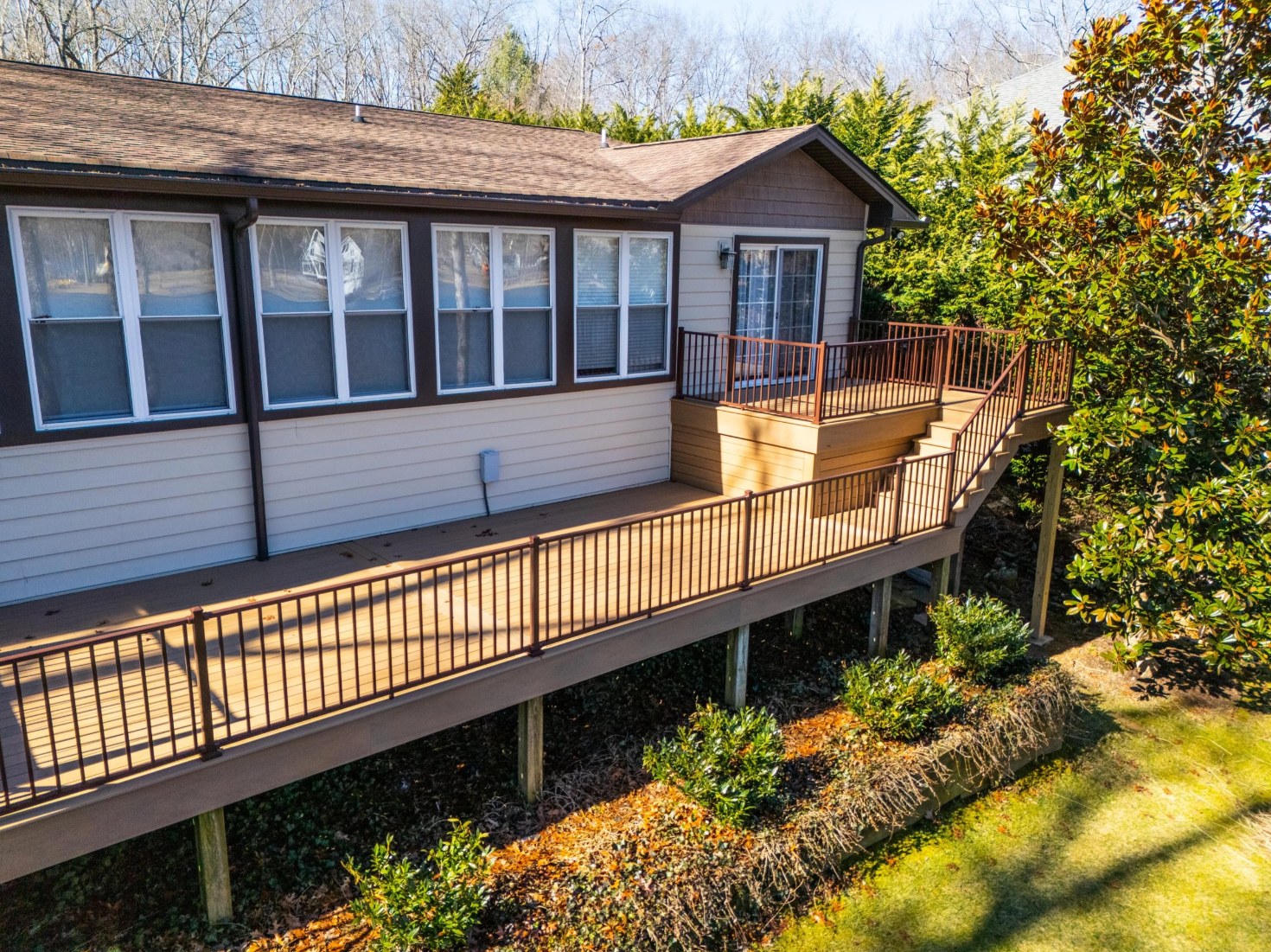
In the TimberTech vs Trex debate, this is where the brands separate most, and it’s the category that matters most here. Tennessee decks deal with humid summers, heavy spring rain, and morning dew that lingers in shaded yards. Moisture usually attacks a deck board from below, where air doesn’t move and the sun never reaches. A board capped on three sides leaves the bottom of the core exposed. On a raised, well-ventilated deck, that’s rarely a problem. On a low deck, a lake lot around Fairfield Glade or Lake Tansi, or a wooded lot that stays damp, a four-sided cap or a PVC board gives you more protection. Whichever brand you choose, the frame underneath has to breathe. Our
deck framing guide explains how the structure below the boards affects how long the surface lasts.
Heat Underfoot
Every composite and PVC deck gets warm in direct July sun. Color matters more than brand, and lighter boards stay noticeably cooler than dark ones. Both manufacturers now offer heat-reducing technology on select lines and colors, and PVC boards tend to cool down faster once the sun moves off them. If your deck faces south or west with no shade, pick a lighter color and ask to feel a sample that has been sitting in the sun.
Looks and Color Options
Both brands have moved well past the flat, plastic look of early composites. Trex Transcend and Signature boards have deep grain and multi-tonal streaking. TimberTech Legacy and Vintage boards are known for a hand-scraped hardwood look with a matte finish. This one comes down to personal taste. Take samples home, lay them next to your siding and trim, and look at them in morning and evening light before you decide. Railing changes the look as much as the boards do, so it helps to choose them together. Our
deck railing guide compares aluminum, cable, and wood options.
TimberTech vs Trex Cost
Both brands cover a wide price range, from entry-level boards that compete with premium wood up to high-end lines. Line for line, TimberTech composite and Trex composite land close to each other. TimberTech Advanced PVC typically costs more than either brand’s composite because of what the board is made of. Keep in mind that boards are only one part of the price. Framing, stairs, railing, and the size and height of the deck move the total more than the brand does. The calculator on our
decking page lets you compare materials and railing styles for your square footage before you talk to anyone.
Warranty and Installation
Both manufacturers back their boards with long limited warranties, and the coverage differs from one product line to the next. Read the current warranty document for the exact board you’re considering instead of relying on a summary. Installation matters as much as the board. Gapping, fastener choice, joist spacing, and ventilation all affect how a deck performs over time. As a Platinum TimberTech contractor, our crews install these boards to the manufacturer’s specifications, and every deck starts with a 3D rendering so you can see the finished design before we build.
Quick Comparison
TimberTech Composite: Wood and polymer core. Four-sided cap on Terrain, Reserve, and Legacy. Strong moisture protection. Natural, matte wood looks.
TimberTech Advanced PVC: Solid polymer with no wood fiber. Best moisture resistance of the three. Cools quickly out of direct sun. Highest upfront cost.
Trex Composite: Wood and plastic core with a three-sided shell. Highest recycled content. Widely available. Broad range of price points.
TimberTech or Trex: Which Should You Choose?
The TimberTech vs Trex decision usually comes down to where the deck sits and how much moisture it will see. Choose TimberTech if your deck is close to the ground, shaded, or near water, or if you want the option of a PVC board with no wood in it. Choose Trex if you like its colors, your deck is raised and well ventilated, and recycled content is a priority for you. Either way, a well-built frame and a careful installation will decide how the deck looks in fifteen years far more than the logo on the board. You can see the collections we install on our
composite decking and
PVC decking pages.
Ready to Compare Boards in Person?
If you’re still weighing TimberTech vs Trex, we can help. We’ll walk you through TimberTech samples, look at your site, and help you choose the right board, color, and railing for your deck. Call
(931) 787-7715 or
reach out through our contact page to schedule your consultation.