Hip roof vs gable roof is one of the first design decisions on any new home, addition, or covered porch, and it affects far more than looks. The shape of a roof changes how it handles wind, what it costs to frame and cover, how much attic space you get, and how the whole house reads from the street. Both shapes are all over Tennessee, often on the same street and sometimes on the same house. Here’s how they compare and how to decide which one fits your project.
What Is a Gable Roof?
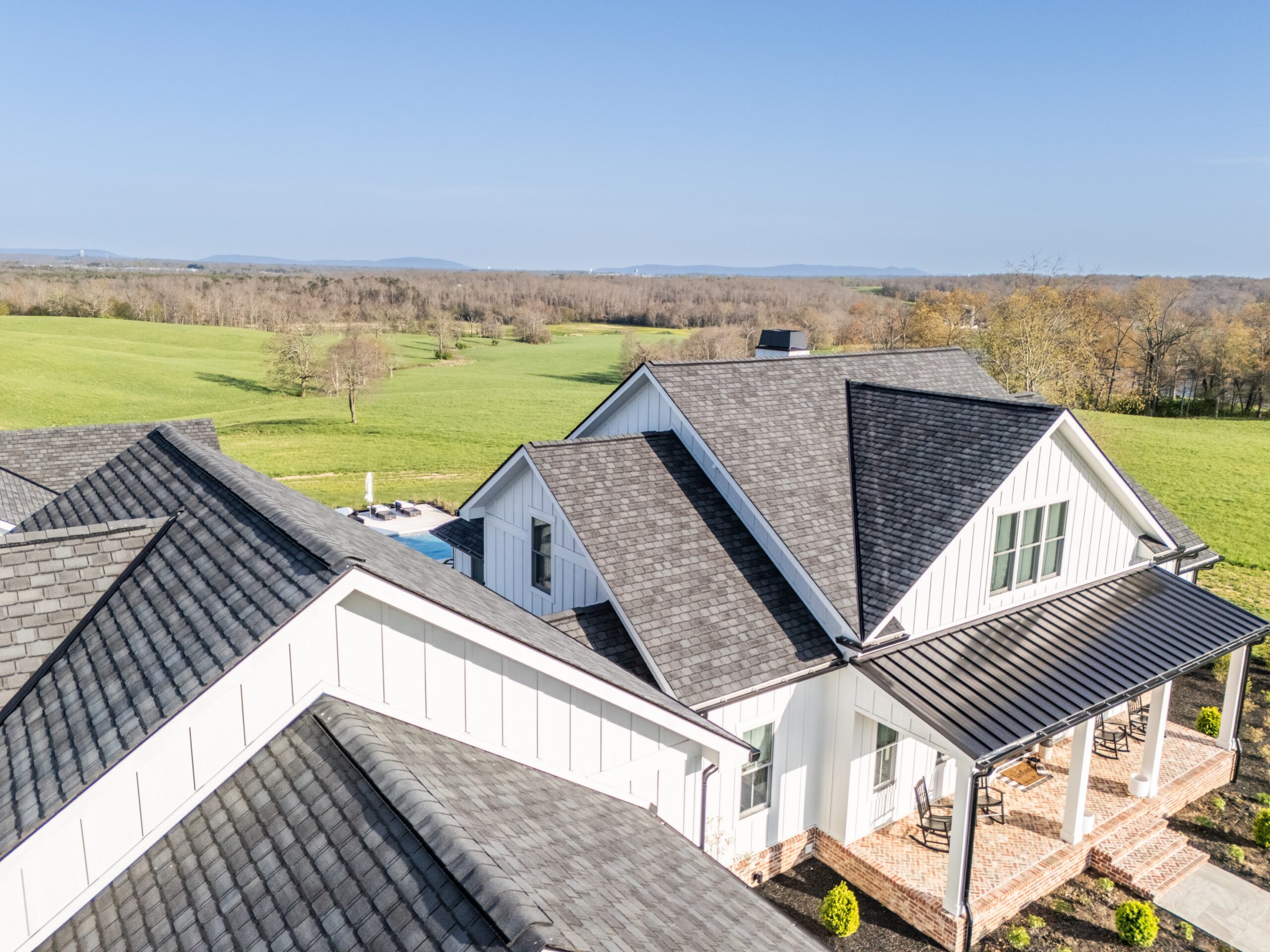
A gable roof has two sloping sides that meet at a ridge. The ends of the house are flat, vertical walls that rise to a triangle at the top. That triangle is the gable. It’s the classic house shape a child draws, and it’s the most common roof style in the country because it’s simple, efficient, and sheds water well.
What Is a Hip Roof?
A hip roof slopes down on all four sides. There are no flat end walls. The sides meet at angled seams called hips, and on a rectangular house they come together at a shorter ridge along the top. The eaves and gutters run around the entire house, which gives a hip roof its low, balanced look.
Hip Roof vs Gable Roof in High Wind
This is the biggest performance difference between the two. Because a hip roof slopes on every side, wind has no flat wall to push against, and the framing braces itself in all four directions. Wind tunnel research cited by the U.S. Department of Energy’s Building America program found peak wind pressures can be as much as 50% lower on a hip roof than on a gable roof. A gable roof can stand up to Tennessee weather when it’s built right. Its end walls catch wind like a sail, though, and the overhangs at the gable ends are where uplift does the most damage. A well-built gable roof needs properly braced end walls and securely fastened overhangs. On exposed lots along the Cumberland Plateau, where straight-line winds are common, that detail matters. If your home sits in the open, our guide on
when to get your roof checked after high winds is worth a read. So is our explanation of
Fortified roofing, which strengthens the roof edges and deck on any roof shape.
Cost Differences
On cost, the hip roof vs gable roof comparison is simple. A gable roof is usually the less expensive of the two. The framing is simpler, and there are fewer angled cuts, so there is less labor and less wasted material. A hip roof needs more complex framing, more cutting along every hip, and extra hip and ridge cap shingles, and it takes longer to build. On the other hand, a gable roof has more exterior wall to side and paint at each end. On a new build, the difference is a real line item but rarely the deciding one. For a sense of what goes into roof pricing in general, see our
itemized roof replacement cost breakdown.
Attic Space and Ventilation
Gable roofs win on space. The tall end walls create a full-height attic that works for storage, a bonus room, or vaulted ceilings, and those walls can hold gable vents or windows. A hip roof slopes in from every side, so the attic is smaller and harder to use. Ventilation works differently too. A hip roof has a shorter ridge, which means less room for ridge vent, so the soffit intake and the exhaust vents have to be planned carefully. Either shape can be ventilated well when the system is designed on purpose.
Rain, Leaks, and Maintenance
Both shapes shed water well when the pitch suits the roofing material. A hip roof has more seams, since every hip is a joint that needs to be capped correctly. A gable roof has exposed rake edges that need solid drip edge and well-fastened shingles. When it comes to leaks, hip roof vs gable roof matters less than you might expect. Complexity is the bigger factor. Valleys, dormers, chimneys, and skylights are where water finds its way in, so a simple roof of either type will outperform a complicated one. Hip roofs do have one practical advantage. They have overhangs and gutters on all four sides, which keeps water away from every wall of the house.
Style and Curb Appeal
Gable roofs suit farmhouse, Craftsman, cottage, and traditional two-story homes. They pair well with front porches, board and batten gables, and metal accent roofs. Hip roofs are a natural fit for ranch homes, brick traditionals, and many of the single-level homes popular in Fairfield Glade and other Plateau communities. If you own a ranch, our guide to
roof colors for ranch style homes shows how much the roofline shapes the look of the house. Many homes combine both, with a hip roof over the main house and gables over the entry or garage to add interest.
Quick Comparison
Gable roof: Lower cost. Simple framing. More attic space. Easier to ventilate. Needs braced end walls in high-wind areas.
Hip roof: Better wind performance. Overhangs and gutters on all sides. Less attic space. More complex framing and higher cost.
Which Roof Shape Is Right for Your Home?
If you’re replacing the roof on an existing home, the shape is already set, and changing it means reframing the structure. The hip roof vs gable roof decision matters most when you’re building new, adding on, or covering a porch or deck. Choose a gable roof if budget, attic space, or a farmhouse look is the priority. Choose a hip roof if your lot is open and windy or you prefer a lower, wraparound roofline. Many of the best designs use both. On our
custom homes, the roofline is settled during the design stage, long before framing starts.
Talk Through Your Roof With a Local Builder
Jeff Woods Construction has been building and roofing homes across East and Middle Tennessee since 1997. Whether you’re planning a new build or need
roofing work on the home you have, we’ll help you get the design and the details right. Call
(931) 787-7715 or
reach out through our contact page to schedule your consultation.